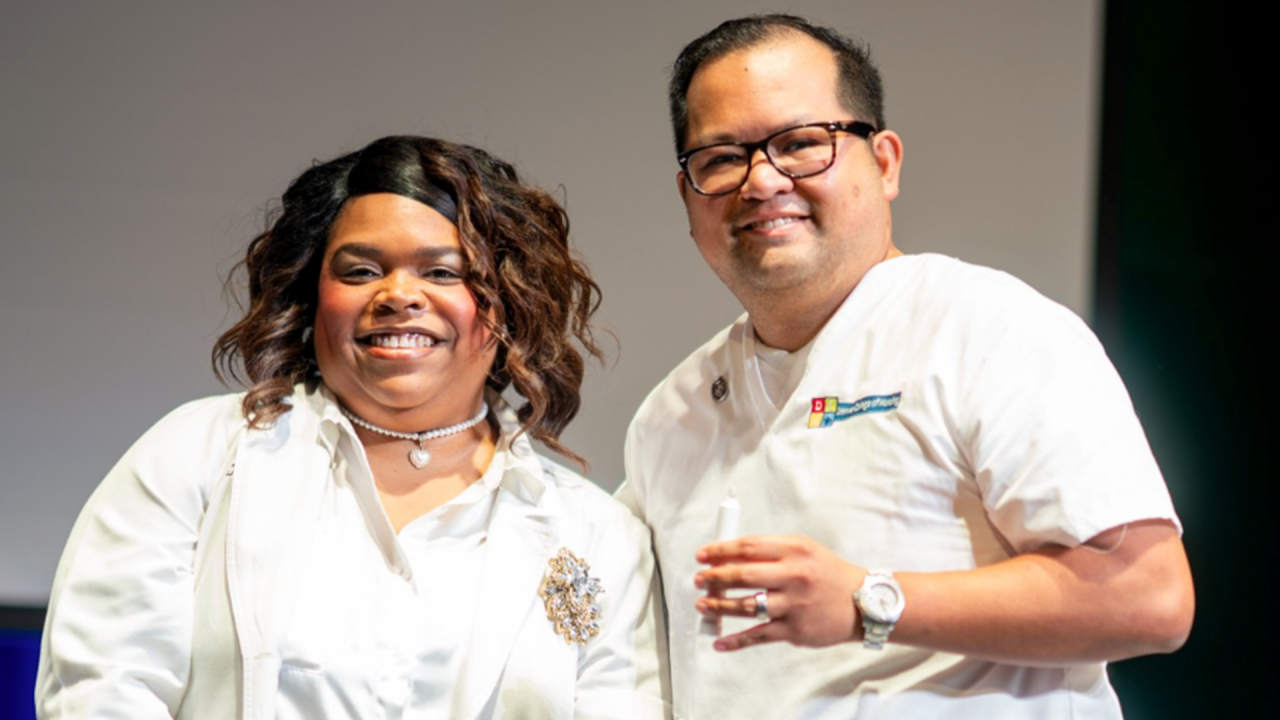
Dr. Harley Tuble is making a career following in his father’s footsteps.
Tuble was born in the Philippines but raised in Texas; his father is also from the archipelagic country. As an adult, Tuble returned to his birth country to attend medical school at the University of the East, where he completed his training in 2014. He became a licensed general practitioner, working in various roles before returning home to the Houston area in 2016.
When Tuble returned to Texas, he began working toward his U.S. medical licensure while also working for his family’s home health business. He passed the required United States Medical Licensing Examination (USMLE) and started looking toward residency options, but he took an interesting side quest before beginning his residency. He went back to school, enrolling in Denver College of Nursing’s Bachelor of Science in Nursing (BSN) program, which he completed in June 2025 at DCN’s Houston campus.
“I wanted to help run my family business,” he said. “My dad’s a nurse as well. I have relatives who are nurses. I used to go on patient visits with him when I was a kid and just wait in the car. He hustles. He loves his patients, and I wanted a piece of that as well.”
A Healthy View of the Nurse-Doctor Relationship
As both a nurse and a physician, Tuble has a well-rounded view of healthcare. His experience has taught him the importance of kindness and communication between nurses and physicians.
“What I learned as a physician and also as a nurse is we have to be kind to each other,” he said. “Sometimes there are communication issues. A lot of it stems from just not hearing the orders correctly. As a physician you have to be very nice to your nurses, especially the tenured ones who have been there for a while. They know a lot. Nurses know exactly what the patient needs.”
Tuble also said he enjoys the reactions he gets from nurses when, in his physician residency role, he tells them that he, too, is a nurse.
“It makes them really happy,” he said. “I just try to be as nice and courteous as possible because I know exactly what they go through.”
Helpful Simulations, Labs, and Student Resources
As someone who has been through medical school, Tuble still notes that nursing school is not easy. He offers some advice for those considering nursing school.
“Don’t be shy about asking for help,” he said. “If you don’t know something, don’t ask at the very last minute. Whenever the light shines in your face and you’re stressed, try to be well prepared before you go into a situation.”
He also recommends using the resources available, and there are lots at the Houston campus. He notes that the faculty and staff are supportive and care about their students. Students have access to dedicated support to help with clinical placements. He also said taking the Health Education Systems Incorporated (HESI) exams at DCN helped him prepare for the National Council Licensure Examination for Registered Nurses (NCLEX-RN). Another aspect of the DCN Houston experience is working with simulated patients in lab settings, which can be intense.
“The simulated patients are really good,” he said. “They help you prepare before you go into the room, assess the patients, and perform the right procedures on the patients. The simulations were very useful. They’re pretty advanced in my opinion. You can watch a simulated patient deteriorate right before your eyes because you’re doing something wrong. It gives you a little bit of panic, but that’s how it is in real life, in the hospital.”
Extensive Support From Faculty and Staff
Tuble did some research about other nursing schools in the area before landing on DCN’s Houston campus. He compared a few options, but when he requested information from DCN Houston, he got a very quick response back, and even had an interview the next day.
“It looked like a really great program. It had the accelerated time frame, and it was a bachelor’s program, which is what I really wanted,” he said. “They don’t waste time. They saw my background and that I already had a bachelor’s and other medical [schooling], and they accepted me soon afterwards.”
One of the first people Tuble spoke with once he started the program was the campus president, Chad Muse.
“I was like, ‘Oh, this guy is really cool.’ He was nice,” Tuble said. He also got to know the nursing school dean, Dr. Samantha Mitchell, as well. “I love Dr. Mitchell. She’s awesome.”
One of the benefits of a smaller institution is the close interaction with faculty and staff. Tuble said he appreciated the smaller cohort size and was able to get to know his fellow students really well. He counts them as friends — as “cousins” — and even helped tutor some of them when he realized they were struggling during the first semester.
“I didn’t like the fact that I could be missing a couple friends going into the next semester,” he said. “I really hate losing classmates to attrition like that. It’s not that big of a cohort, so I get personal with everybody. I enjoy talking to everybody and once I see that people are struggling, that’s when I start going into tutor mode. I really hate it whenever I see people struggling.”
Tuble said he enjoyed seeing his peers’ success after a bit of tutoring and study support. Seeing a classmate move up a couple points on the next exam was satisfying for this lifelong learner. Perhaps he will even parlay that into a future role as a professor, but for now, the focus is on getting accepted into a family medicine residency at an outpatient clinic in Las Vegas, Nevada, where he just completed clinical training, with the next step there being to become a wound specialist.
“I was just doing wound vac therapy,” he said of his work with his family’s home health business. “I really enjoy doing wound care.”
Take the Next Step in Healthcare With a BSN From Denver College of Nursing in Houston
Tuble hopes his story inspires other healthcare workers with licensure from other countries to explore nursing as a career path. By transferring credits in, Tuble was able to take the accelerated path to a Bachelor of Science in Nursing at Denver College of Nursing’s Houston campus.
The DCN Houston BSN program is accredited by the Commission on Collegiate Nursing Education (CCNE), approved by the Texas Board of Nursing (BON), and operates under regional accreditation from the Higher Learning Commission (HLC). The program emphasizes hands-on work through clinicals and simulations, leading to graduates who are well prepared for the NCLEX-RN and the workforce.
Recommended Readings
Jokira Jiles Turned a Passion for Care Into a Nursing Career
How to Get a Texas Nursing License
What Does It Take to Get a Nursing Degree in Houston?