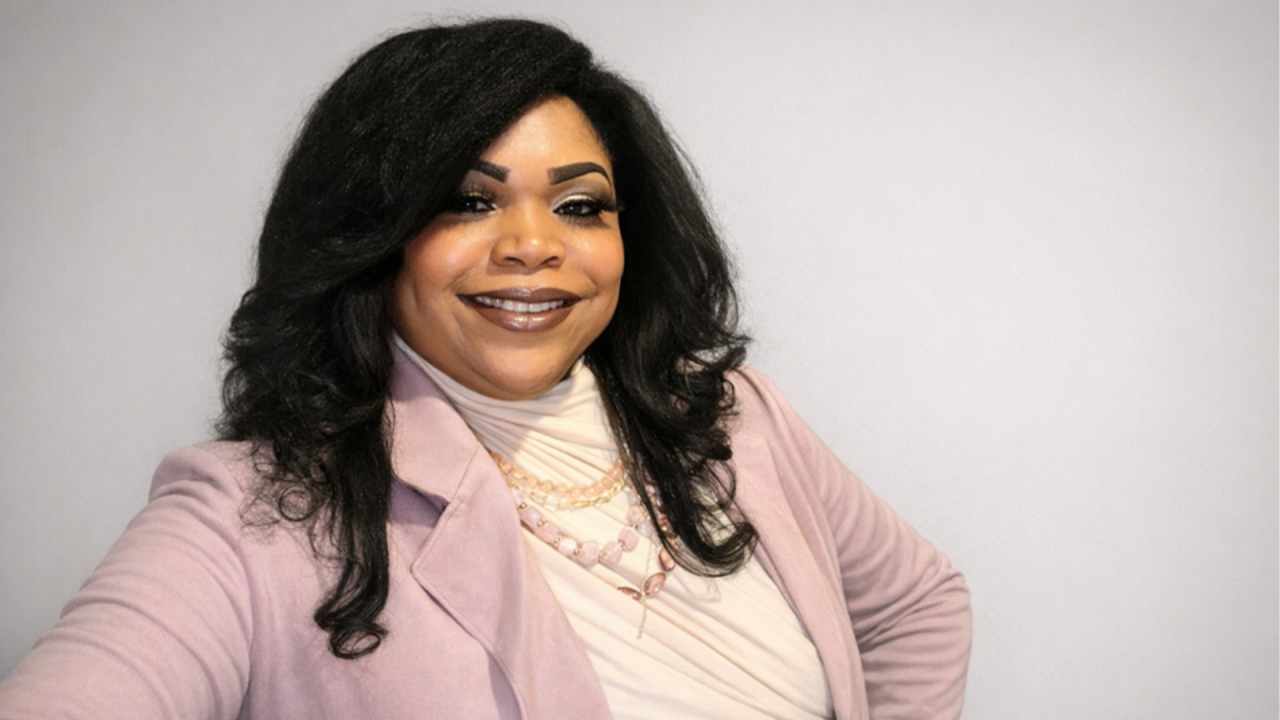
There is nothing Samantha Mitchell, DNP, MSN, AGPCNP-BC, loves more than a good celebration. As dean of nursing at Denver College of Nursing (DCN) in Houston, her celebration schedule is always full.
On any given day, Mitchell might be on the news celebrating how much DCN in Houston has grown in the past few years. Or she might be visiting one of the school’s clinical partners, celebrating their staff during Nurses Week.
But more often than not, Mitchell can be found on DCN’s Houston campus celebrating her students as they earn their Bachelor of Science in Nursing (BSN) degrees and prepare to become registered nurses (RNs).
“They’re going to be my colleagues one day, so their accomplishments are my accomplishments,” she says. “We all celebrate together. We all grow together.”
With her years of experience and unyielding sense of duty to the future of nursing, Mitchell ensures her students always have the means to grow and reason to celebrate.
A Career Built on Compassion and Innovation
As a child, Mitchell’s grandmother frequently took her to church services at the local nursing home. This inspired her to go to nursing school so she could one day give older patients the compassionate, holistic care they need.
Because of the complex needs of the aging population, Mitchell developed a strong and diverse tool kit while working as an RN and charge nurse in long-term care facilities. “The thing I love about gerontology is that it exposes you not just to acute conditions but management of chronic care conditions,” she says.
Mitchell also got hands-on experience in pharmacology, mental health, and infectious diseases at various community healthcare facilities.
With this deep experience, Mitchell transitioned into leadership. She has served as a staff development coordinator, a director of clinical services, and a chief nursing officer at different nursing home and rehabilitation facilities. In these roles, Mitchell made waves as a catalyst for innovation and an advocate for patients’ well-being.
Raising Standards and Prioritizing Patients
One of Mitchell’s biggest contributions to nursing came when she was the chief nursing officer at a long-term care facility. She noticed how hard it was to get healthcare facilities to accept her residents when they had respiratory and pulmonary issues. Her solution: build a pulmonary unit at her own facility.
“That’s something that had really never been done in South Texas,” Mitchell says. “It became a standard of practice moving forward.”
While she was pursuing her Doctor of Nursing Practice (DNP) in Nursing Science, Mitchell made another important contribution to her field. As a doctoral student during the COVID-19 pandemic, she decided to do her research project on how her facility could use an electronic health record (EHR) system to make sure that patients had access to care during the pandemic and to coordinate the facility’s comprehensive telehealth services.
“A lot of patients were experiencing depression and anxiety because they couldn’t really be close to us or come and see us at the clinic,” she says. “So just them being able to see us virtually kind of helped bridge that gap in care. I helped get that program started at that clinic, and they still use it to this day.”
But as much of an impact as Mitchell was making at the time, she was ready to try something else. With her DNP in hand, she set her sights on a new frontier where she could make an even bigger difference: nursing education.
The Transition to Nursing Education
As Mitchell advanced in her career in long-term care and similar facilities, she became quite comfortable with training and educating new professionals. But while she was working as a staff development coordinator, she noticed that many of the nurses she trained did not have all the skills they needed to serve high-needs older patients.
However, she did not lay the blame on the nurses themselves.
“There were policies at the corporate level that I felt needed to change,” she says. “So when an opportunity became available, I stepped up into a more robust leadership role and pushed for those changes when it came to education in the healthcare setting.”
As she spearheaded policy changes, Mitchell also took a hands-on approach with the students doing their clinicals at her facilities. Her compassionate, supportive approach got her noticed. In 2019, she became a professor of nursing sciences and fell in love with that side of her field.
“I went into academics because I wanted to give a lot of this knowledge that I have just floating around in my head to the younger generation,” she says.
Then, in 2023, Mitchell’s skill set opened yet another door. A new school of nursing in Houston needed a dean of nursing to not just run the program but also help build it. Mitchell fit the bill perfectly.
Creating a Culture of Support, Achievement, and Celebration
After she arrived at DCN’s Houston campus, Mitchell began putting her full range of clinical and leadership skills to use. She added new evidence-based courses to the curriculum, brought in high-fidelity mannequins for students to practice on, and helped the school get fully approved by the Texas Board of Nursing in just a year. That process typically takes three to four years, and Mitchell and her fellow administrators are thrilled with the accomplishment.
But the thing Mitchell is most proud of is the culture of support, achievement, and celebration that she and her colleagues have created.
“We take the traditional nursing track and make it a more fun and palatable track,” she says. “We understand that you have a life outside of here.”
To that end, Mitchell has equipped DCN’s Houston campus with all the resources students need to complete their studies and launch their careers. One of Mitchell’s favorite resources is the tutoring program.
The school hosts weekly tutoring sessions hosted by floor nurses who use the skills they are talking about every day. This gives students the opportunity to consider difficult topics from a fresh perspective. True to form, Mitchell occasionally steps in to tutor students herself on dosage calculation; she perfected her skill at this task serving older patients.
However, no matter what she is doing, her goal remains the same.
“We want you to succeed,” she says. “I’m so excited for our students, and I want them to know that we are there for them.”
Launch Your Own Impactful Career in Nursing
In the Bachelor of Science in Nursing completion program at Denver College of Nursing’s Houston campus, Samantha Mitchell, DNP, MSN, AGPCNP-BC, and her colleagues are not just preparing students to become RNs. They are giving them the support they need to enter the workforce with momentum, prepared to become tomorrow’s leaders and innovators.
Qualifying students in the Houston area can complete their BSN journey in as little as 21 months at DCN, while enjoying a supportive and community-focused learning experience. To find out more about DCN’s Houston campus, the BSN curriculum, and available student support resources, request more information today.
Recommended Readings
Different Types of Nursing: Exploring Nurse Careers
Jokira Jiles Turned a Passion for Care Into a Nursing Career
What Does It Take to Get a Nursing Degree in Houston?